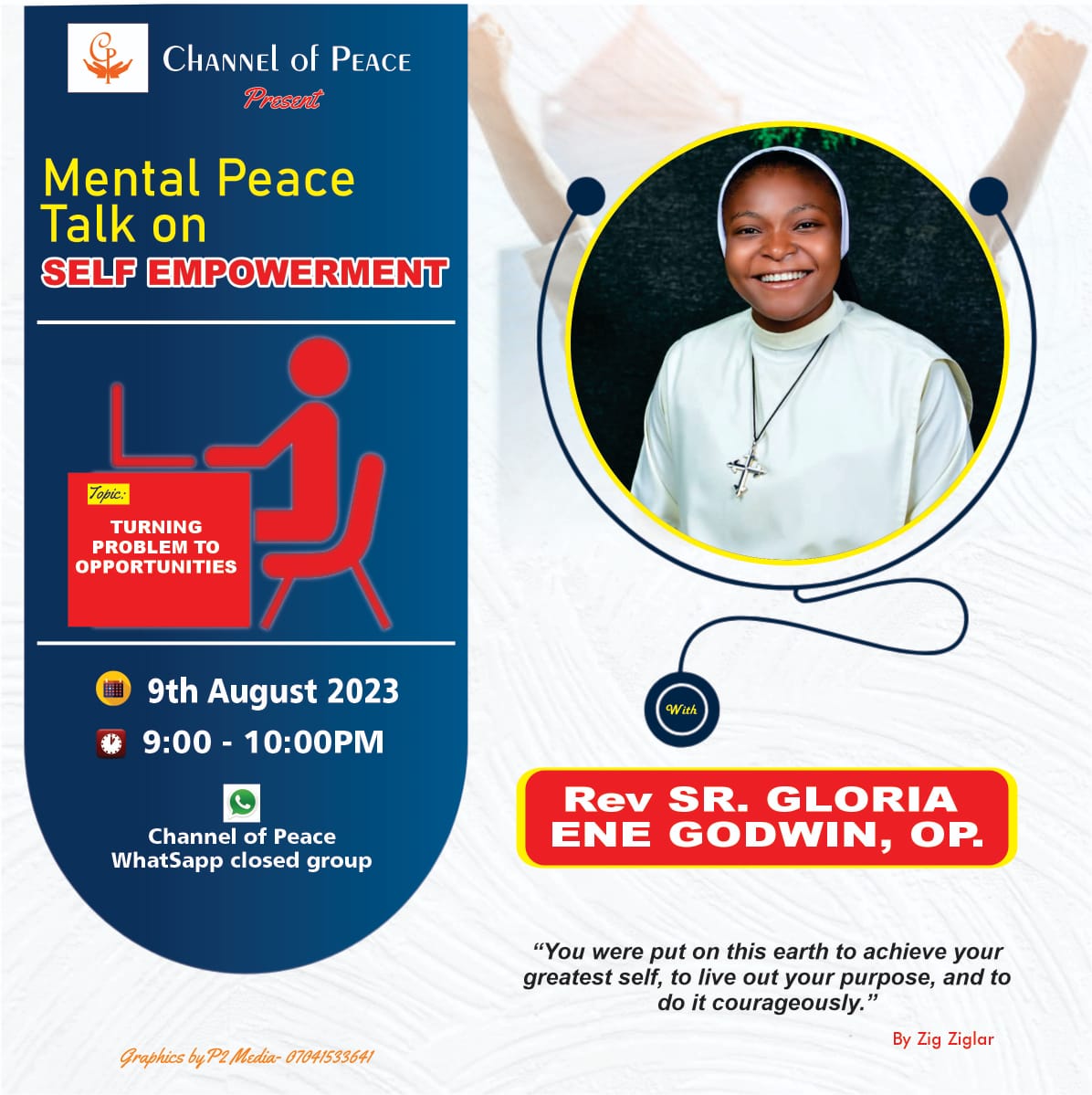
Turning problems to opportunity By Sr Gloria Ene Godwin, OP

        Turning problems to opportunity

   By Sr Gloria Ene Godwin, OP


key terms: 

Problems: A problem is generally considered to be a task, a situation, or person which is difficult to deal with or control due to complexity. In everyday language, a problem is a question proposed for solution, a matter stated for examination or proof.

Opportunity: it is an occasion or situation that makes it possible to do something that you want to do or have to do, or the possibility of doing something.

So many things happen in our lives that turn us off the course we were on and they may be our PROBLEMS. So many of us go through problems everyday and night. It could be health issue, school problems, family problems, vocation crises and so many others especially in the current situation of our country. Sometimes when going through all of these, we may not see the good effect of it, or we may come to realize it later because of the pain involved. Let’s take for instance the speed breaker on the road maybe seen as problem of disturbing the driving some people but it is a way of controlling high speed.

Our problem may cause us to slow down, experience stress, or give up completely in so many things but sometimes what we fail to understand is that may consider to be a problem to us may turn out to be positive changes for us or another opportunity to learn great things. Most often our problems allows us to reflect on how we could do things differently and examine what did and did not work right the first time. Our problems can also open up opportunities we did not once have before.

Let us know that some circumstance may seem to be difficult and devastating but we should never give -up rather let us try to keep a positive attitude and see those problems as opportunities. If we see from a larger perspective, it is all a learning path, and in this path, we make many mistakes and face many problems. But we should never give up, and we should be optimistic. We all find it discouraging when our conditions do not do not go with our plans and expectations. Problems occur repeatedly, and even most motivated people get discouraged.  

Some steps involved in turning problems into opportunities

  • Understanding the situation and naming the problem: This entails accepting the fact that you have a problem since we don’t have control over all the things that happen to us and also not shifting blames or looking for who to blame. 

  • Focusing on the solution, not on the problem: This means that we should focus on the solution to our problem rather than on the problem itself because it will only continue to hurt us and when we. The problem will not give us anything but the path of making the right decision and finding solution to it can open many new opportunities for us.

  • knowing the cause of the problem: This means knowing root cause of the problem so that you don’t end up wasting your time or causing more problems. 


Some opportunities gotten from our problems

  • Opportunity to pray: 1 Samuel 1:15-16 tell us the story of Hannah who is a married woman in the Bible that wanted a child but she was barren.  Her husband tried to comfort her, but it didn’t help. So, she cried out to God. In God, we find the safety and security to share all our problems, just as Hannah did. The first person we should share our problems and pains with should be God because He is our only true friend and He is always ready to answer us.

  • Opportunity to think and act right: sometimes when faced with difficult problem we tend to act right and that brings about positive changes in our lives.

  • Opportunity of getting more insight, more knowledge: we all know that no man is an island and the more we experience life the more we learn new things, we become wise and our approaches changes.

  • Opportunity to be open to anything: our problems can actually help us to be more open to face more challenges and even make us stronger.

  • Our problems can make us to be more sensitive to the needs of others.


Conclusion 

Let us look for opportunities everywhere. Life itself provide opportunity for us to see good in all that happens to us and to rediscover our capabilities and new routes towards our vision. Let us use all our challenges as stepping stones to build the life we want because when we focus on our problems, when we only think of what is wrong , we will only see problems and fail to see opportunities. 

We are all WIPs (Works in Progress), not VIPs, and in this situation of ours, we will make many mistakes, face many problems, and things will become harsh before they become easy. So, we should never feel dejected, we should never feel discouraged, we should constantly learn from mistakes and keep improving them.


COLD SORES by UDUH IKENNA TOCHUKWU

COLD SORES

Master UDUH IKENNA TOCHUKWU

Cold sores are also called: herpes labialis

OVERVIEW

Cold sores, or fever blisters, are a common viral infection. They are tiny, fluid-filled blisters on and around the lips. These blisters are often grouped together in patches. After the blisters break, a scab forms that can last several days. Cold sores usually heal in 2 to 3 weeks without leaving a scar.

Cold sores spread from person to person by close contact, such as kissing. They’re usually caused by herpes simplex virus type 1 (HSV-1), and less commonly herpes simplex virus type 2 (HSV-2). Both of these viruses can affect the mouth or genitals and can be spread by oral sex. The virus can spread even if you don’t see the sores.


There’s no cure for cold sores, but treatment can help manage outbreaks. Prescription antiviral medicine or creams can help sores heal more quickly. And they may make future outbreaks happen less often and be shorter and less serious


SYMPTOMS

A cold sore usually passes through several stages:

Tingling and itching. Many people feel itching, burning or tingling around the lips for a day or so before a small, hard, painful spot appears and blisters form.

Blisters. Small fluid-filled blisters often form along the border of the lips. Sometimes they appear around the nose or cheeks or inside the mouth.


Oozing and crusting. The small blisters may merge and then burst. This can leave shallow open sores that ooze and crust over.

Symptoms vary, depending on whether this is your first outbreak or a recurrence. The first time you have a cold sore, symptoms may not start for up to 20 days after you were first exposed to the virus. The sores can last several days. And the blisters can take 2 to 3 weeks to heal completely. If blisters return, they'll often appear at the same spot each time and tend to be less severe than the first outbreak.

In a first-time outbreak, you also might experience:

Fever.

Painful gums.

Sore throat.

Headache.

Muscle aches.

Swollen lymph nodes.

Children under 5 years old may have cold sores inside their mouths. These sores are often mistaken for canker sores. Canker sores involve only the mucous membrane and aren't caused by the herpes simplex virus

CAUSES

Cold sores are caused by certain strains of the herpes simplex virus (HSV). HSV-1 usually causes cold sores. HSV-2 is often the cause of genital herpes. But either type can spread to the face or genitals through close contact, such as kissing or oral sex. Shared eating utensils, razors and towels can also spread HSV-1.

Cold sores are most likely to spread when you have oozing blisters. But you can spread the virus even if you don’t have blisters. Many people who are infected with the virus that causes cold sores never develop symptoms.

Once you’ve had a herpes infection, the virus can hide in nerve cells in the skin and may cause another cold sore at the same place as before. A return of cold sores may be triggered by:

Viral infection or fever.

Hormonal changes, such as those related to a menstrual period.

Stress.

Fatigue.

Being in the sun or wind.

Changes in the immune system.

Injury to the skin, etc.

RISK FACTORS

Almost everyone is at risk of cold sores. Most adults carry the virus that causes cold sores, even if they’ve never had symptoms.

You’re most at risk of complications from the virus if you have a weak immune system from conditions and treatments such as:

HIV/AIDS.

Atopic dermatitis (eczema).

Cancer chemotherapy.

Anti-rejection medicine for organ transplants.

COMPLICATIONS

In some people, the virus that causes cold sores can cause problems in other areas of the body, including:

Fingertips. Both HSV-1 and HSV-2 can be spread to the fingers. This type of infection is often referred to as herpes whitlow. Children who suck their thumbs may transfer the infection from their mouths to their thumbs.

Eyes. The virus can sometimes cause eye infection. Repeated infections can cause scarring and injury, which may lead to vision problems or loss of vision.

Widespread areas of skin. People who have a skin condition called atopic dermatitis (eczema) are at higher risk of cold sores spreading all across their bodies. This can become a medical emergency.

PREVENTION

Your health care provider may prescribe an antiviral medicine for you to take on a regular basis if you develop cold sores more than nine times a year or if you’re at high risk of serious complications. If sunlight seems to trigger your condition, apply sunblock to the spot where the cold sore tends to form. Or talk with your health care provider about using an oral antiviral medicine before you do an activity that tends to cause a cold sore to return.

Take these steps to help avoid spreading cold sores to other people:

Avoid kissing and skin contact with people while blisters are present. The virus spreads most easily when the blisters leak fluid.

Avoid sharing items. Utensils, towels, lip balm and other personal items can spread the virus when blisters are present.

Keep your hands clean. When you have a cold sore, wash your hands carefully before touching yourself and other people, especially babies.

Take your bath regularly.

Master UDUH IKENNA TOCHUKWU

THANK YOU!


Dehydration by Dyrionyema Munachiso Victoria

 DEHYDRATION

Dyrionyema Munachiso Victoria 

Dehydration does not just mean the body is losing water — it also means it's losing electrolytes, such as sodium, magnesium, and potassium, all of which one needs to breathe, move, talk, and generally stay up and running. Dehydration occurs when one loses more fluid than he/she takes in, and the body doesn't have enough water and other fluids to carry out its normal functions. 

Anyone may become dehydrated, but the condition is especially dangerous for young children and older adults. The most common cause of dehydration in young children is severe diarrhea and vomiting. Older adults naturally have a lower volume of water in their bodies, and may have conditions or take medications that increase the risk of dehydration

Mild to moderate dehydration can be reversed by drinking more fluids, but severe dehydration needs immediate medical treatment.

SYMPTOMS

Thirst isn't always a reliable early indicator of the body's need for water. Many people, particularly older adults, don't feel thirsty until they're already dehydrated. That's why it's important to increase water intake during hot weather or when you're ill.

The signs and symptoms of dehydration also may differ by age.

Infant/young child

Dry tongue and dry lips.

No tears when crying.

Fewer than six wet diapers per day (for infants), and no wet diapers or urination for eight hours (in toddlers).

Sunken soft spot on your infant’s head.

Sunken eyes.

Dry, wrinkled skin.

Deep, rapid breathing.

Cool, blotchy hands and feet.

Irritability.

Adults

Extreme thirst

Less frequent urination

Headache and confusion.

Tiredness (fatigue).

Dizziness, weakness and lightheadedness.

Dry mouth and/or a dry cough.

High heart rate but low blood pressure.

Flushed (red) skin.

Muscle cramps.

Heat intolerance or chills.

Constipation

CAUSES

Diarrhea 

Vomiting

Fever

Excessive sweating

Increased urination

Certain medications

Certain disease conditions

TREATMENT

Dehydration must be treated by replenishing the fluid level in the body. This can be done by consuming clear fluids such as water, or sports drinks. Some dehydration patients, however, will require intravenous fluids in order to rehydrate. People who are dehydrated should avoid drinks containing caffeine such as coffee, tea, and sodas.

Underlying conditions that are causing dehydration should also be treated with the appropriate medication. The best approach to dehydration treatment depends on age, the severity of dehydration and its cause.

For infants and children who have become dehydrated from diarrhea, vomiting or fever, use an oral rehydration solution. These solutions contain water and salts in specific proportions to replenish both fluids and electrolytes.

Most adults with mild to moderate dehydration from diarrhea, vomiting or fever can improve their condition by drinking more water or other liquids. 

If you work or exercise outdoors during hot or humid weather, cool water is your best bet. Sports drinks containing electrolytes and a carbohydrate solution also may be helpful.

Children and adults who are severely dehydrated should be treated by emergency.

PREPARATION OF ORS

Ingredients

Six (6) level teaspoons of Sugar

Half (1/2) level teaspoon of Salt

One Litre of clean drinking or boiled water and then cooled - 5 cupfuls (each cup about 200 ml.)

Preparation Method:

Stir the mixture till the salt and sugar dissolve.

COMPLICATIONS

If dehydration is not checked, it can lead to serious complications; these can include:

Low blood volume – less blood produces a drop in blood pressure and a reduction in the amount of oxygen reaching tissues; this can be life threatening.

Seizures – due to an imbalance of electrolytes.

Kidney problems – including kidney stones, urinary tract infections, and eventually kidney failure.

Heat injury – ranging from mild cramps to heat exhaustion or even heat stroke.

PREVENTION

To prevent dehydration, drink plenty of fluids and eat foods high in water such as fruits and vegetables. Letting thirst be your guide is an adequate daily guideline for most healthy people.

People may need to take in more fluids if they are experiencing conditions such as:

Vomiting or diarrhea. If your child is vomiting or has diarrhea, start giving extra water or an oral rehydration solution at the first signs of illness. Don't wait until dehydration occurs.

Strenuous exercise. In general, it's best to start hydrating the day before strenuous exercise. Producing lots of clear, dilute urine is a good indication that you're well-hydrated. During the activity, replenish fluids at regular intervals and continue drinking water or other fluids after you're finished.

Hot or cold weather. You need to drink additional water in hot or humid weather to help lower your body temperature and to replace what you lose through sweating. You may also need extra water in cold weather to combat moisture loss from dry air, particularly at higher altitudes

Illness. Older adults most commonly become dehydrated during minor illnesses — such as influenza, bronchitis or bladder infections. Make sure to drink extra fluids when you're not feeling well.


Acne | Favorite Nurse Favour (FNF)

 LET’S TALK ABOUT ACNE


Favourite Nurse Favour 

Visit blog

ACNE is a condition on the skin such that the pores(i.e the tiny opening for hair follicles) become blocked with oil and dead skin cells. Acne is found both on the face, neck, chest, back, shoulders and genitals. Surprised about the genital aspect right? It isn’t just found on the face but on other Parts of the body as well. 

Little facts about ACNE: 

It is one of the most common of skin conditions and about 9.4% of the world’s population suffer from it. Acne commonly starts during puberty between the ages of 10 or 13, but you see, teens are not the only people that experience this skin condition. 

Teenage acne usually stay for five to ten years.

The victims of acne aren’t just teenagers even adults and some babies may have an episode of it. 

Acne occurs in both sexes. And most times it is very severe among teen boys. For adults, women are more likely than men to have mild to moderate forms of acne down into their 30s and beyond.

TOP MISCONCEPTION ABOUT ACNE

Using Toothpaste, Lemon Juice And Garlic Will Remove Acne.

Scrubbing Your Face So Hard Will Remove Acne.

Only teenagers suffer from Acne.

Bursting pimples makes it heal.


WHY DO WE NEED TO TALK ABOUT ACNE

In the lives of most teenagers and youth acne breeds Psychosocial Impact such as Emotional Distress. Nevertheless, with the right management and treatment tips, you can get over the uncomfortable psychosocial effect.

Its important we talk about acne because to many people it can lead to other health challenges like Bulimia.

Acne can lead to scarring of the skin in a long run in most cases. Nobody really intend having a scar on their face or an part of their body. Literally people just seek to find various ways to get rid of acne.

It will amaze you to know that many adults frown when they get to see any symptoms of acne on their skin. I personally had lots of them while growing up. If you are a teen and you’ve never had one episode of acne it’s possible that when you grow older, you will have them if the triggers are present.

TYPES OF ACNE

There are majorly six (6) types of acne

BLACKHEAD : From the name you probably might have gotten a view of what this acne looks like right? Yes. This is the black open plug/pore on the skin. This type of acne develops when the natural oil on your skin and dead skin cells build up inside a pore. As the buildup accumulates, it widens the opening of the pore and as the open pore is exposed to air, it then causes a blackhead due to oxidation. That is Oxygen from the air triggers a chemical reaction — with the material in your pore, causing it to turn black.

WHITEHEAD: This acne develops when excess oil and dead skin cells build up and block the opening of a pore of your skin and this causes a blemish that is raised and a white/flesh colored skin.

PAPULES: These are small red, tender solid bumps that are without pus and this is due to the fact that excess oil, dead skin cells, and bacteria got trapped inside a pore. While they start out as solid, within days it may be filled up with pus and become a pustule. 


PUSTULES: This acne is soft, red and tender and these occurs when the natural oil, dead skin cells, and bacteria get trapped inside a pore. As the pore fills with bacteria, inflammation (swelling) develops and a pimple appears

NODULES: This acne develops when a large pore is filled with excess oil, dead skin cells, and bacteria to cause INFLAMMATION (swelling). This goes deep into the skin, this results in a large, deep lesion (injury) that may be visible on the surface of the skin if it’s inflamed


CYST: This acne contain fluid or pus, it’s the higher form of nodules and they may appear large, red, and are typically painful. Cystic acne is considered the most serious type of acne.

CAUSES OF ACNE

There are three main causes of acne and it is associated with lots of triggers. However, acne is caused when the pores of your skin become blocked with:

The Natural Oil In Your Skin: This is when the skin follicles produces very much oil.

Dead Skin Cells: The skin has the tendency to accumulate dead cells in its pores.

Bacteria: Bacteria can easily build up in the skin pore. 

RISK FACTORS OF ACNE

In correlation with the three major causes of acne that I outlined earlier, these other factors as you read on will set a trigger for an individual to get more acne.

Hormones.

Medication 

Certain facial skin care products.

PREVENTIVE TIPS FOR ACNE

Do well to use only mild soaps or cleansers and warm water, avoid using hot water to wash your face as much as you do.

Wash your face in a gentle manner daily and wipe with clean towel. Washing should not be more than twice a day.

Do well to avoid picking or popping and scraping pimples, doing so can make them worse and can cause inflammation and scarring.

Avoid makeup that aren’t perfect for your skin type or use water-based cosmetics that are marked as non-comedogenic.

If you can, avoid environments with high humidity that cause excessive sweating. Most times the type of body cream you use might be sensitive to sun rays and it might also trigger some bumps or inflammation.

Avoid using harsh or exfoliating scrubs.

IN CONCLUSION

I want you to take to heart that acne won’t live with you forever, so you don’t have to freak out when you get any. Understand that you still have hormones running through your body, so, at some point ACNE will appear, but it will reduce as time progress. Do you know even with medication acne takes up to 4-6 weeks before it will totally clear off, some might even take more time than that time before it clears off. Stay calm and understand that it will certainly clear off honestly, it will. Just stick to the ti

ps and you going to notice some difference. 

ANGIOEDEMA by MASTER UDUH IKENNA TOCHUKWU

 ANGIOEDEMA

MASTER UDUH IKENNA TOCHUKWU


ANGIO in medical terms means vessel; relating to blood vessels, lymph vessels, or both

EDEMA is swelling caused by too much fluid trapped in the body’s tissues.


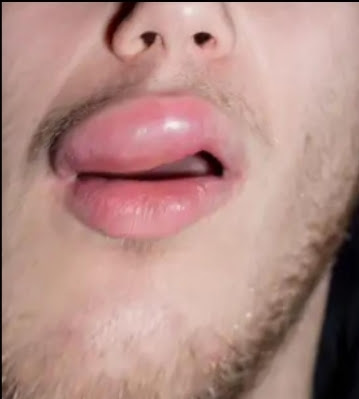
ANGIOEDEMA is a reaction to a trigger that causes swelling in the tissue below the inner layer of your skin called the dermis or the layer below a mucous membrane. 

Angioedema often happens at the same time as hives (urticaria) and for similar reasons. Both angioedema and hives happen when liquid from small blood vessels escapes and fills up tissues, causing swelling.

Usually, angioedema comes on quickly and lasts about a day or two. It most often affects your lips and eyes. However, angioedema can be serious, even fatal, when it affects your airways.

What are the types of angioedema?

There are several types of angioedema. Some organizations may classify angioedema into different types, and the types may vary. In general, though, angioedema types include:

  • Acute allergic angioedema.

  • Non-allergic drug reaction.

  • Idiopathic angioedema.

  • Hereditary angioedema.

  • Acquired C1 inhibitor deficiency.

  • Vibratory angioedema.

Acute allergic angioedema

You might be most familiar with this type of angioedema. It occurs as an allergic reaction to something you’ve come into contact with. This could be something you’ve eaten (a food or beverage), or taken (as in medications) or touched (as in items made with natural rubber latex). In addition, this type of angioedema can occur if an insect or spider bites you.

Acute allergic angioedema happens quickly, usually within minutes to about one to two hours after you’ve made contact with the allergen. You almost always have hives along with the swelling.


Non-allergic drug reaction

This type of angioedema doesn’t necessarily happen as soon as you take the medication. The most common group of medications that cause this non-allergic reaction is angiotensin-converting enzyme inhibitors, often called ACE inhibitors or ACEIs. These medications relax your blood vessels, treat heart failure and may lower blood pressure. Nonsteroidal anti-inflammatory medications, like ibuprofen and naproxen, can also cause angioedema.

Idiopathic angioedema

Idiopathic angioedema is angioedema that has no known cause. The swelling is located in your face, hands, trunk, arms and legs. Some people also have immune system conditions and emotional issues.

Hereditary angioedema

Hereditary angioedema (also called HAE) is something you get genetically from your parents. You can inherit HAE if only one parent carries the gene or has the condition. Some people have spontaneous genetic mutations that cause them to have this type of angioedema. An estimated 1 out of 50,000 people have hereditary angioedema. There are three types of this kind of angioedema, all of them related in some way to the C1 protein and/or C1 esterase inhibitor levels in your blood.

Acquired C1 inhibitor deficiency

Acquired C1 inhibitor deficiency results in angioedema, but it’s not inherited. Acquired means that you weren’t born with this deficiency but you developed it during your lifetime. This type of angioedema, like others, may affect your voice box (larynx) and result in asphyxiation (suffocation). Having B-cell lymphoma may cause acquired C1 inhibitor deficiency.


Vibratory angioedema

In this condition, the swelling is due to repeated vibrations. These can happen while you’re riding a motorcycle, running, jogging, vigorous massage or during other activities. Vibratory angioedema is a form of a similar and rare condition called chronic inducible urticaria, in which hives happen because of outside forces like cold, heat, water, pressure or vibrations. These itchy hives happen repeatedly and last for about six weeks.

Who does angioedema affect?

Angioedema can affect anyone. An estimated 20% to 25% of the U.S. population will have at least one episode of angioedema and/or hives throughout their lives.

SYMPTOMS AND CAUSES

What are the signs and symptoms of swelling (angioedema)?

Signs and symptoms of angioedema include:

  • Puffy or swollen face, especially your eyes and mouth, including lips and tongue.

  • Digestive problems when your intestines are swollen. These problems include abdominal paindiarrhea or nausea and vomiting.

  • Swollen hands, feet or genitals.

  • Dizziness or fainting due to blood pressure changes.

  • Swelling in your mouth, throat or airway that may make it harder to breathe and talk. When this happens, it’s a medical emergency. Get help right away.

What causes angioedema?

The causes of angioedema depend on what type of angioedema you have. Allergies are probably the main cause of the swelling of angioedema. There are many types of allergies that can cause it, including:

  • Food allergies: The main culprits are milk, egg, nuts and shellfish.

  • Medication allergies: Some of the drugs that cause these allergies include antibiotics like penicillin and sulfa drugs, nonsteroidal anti-inflammatory drugs (NSAIDS) and contrast media used in imaging tests. You might also get hives with this type of allergy.

  • Venom: This is released by stinging insects and, rarely, brown recluse spider bites.

  • Natural rubber latex: Latex is used to make gloves, balloons, condoms and catheters (tubes used in medicine). Your healthcare provider has probably asked you if you’re allergic to latex.

Other causes of angioedema include inherited and acquired problems with the C1 inhibitor protein, drug reactions that aren’t standard allergy reactions (there’s no itchiness and no hives) and vibrational movements.

Is angioedema contagious?

No. You can’t catch angioedema or give it to someone else.


DIAGNOSIS AND TESTS

What tests will be done to diagnose angioedema?

It may be difficult to tell what kind of angioedema you have. Your provider will begin with a physical examination, though in many cases the swelling will be easy to see. They’ll ask you questions about:

  • When the swelling started.

  • What you may have eaten, taken or touched that could have caused the reaction.

  • What medications and supplements you're taking.

  • Whether or not you’ve had this type of reaction before.

  • Other family members who may have had swelling.

In addition to the questions, your provider may order blood or skin tests for allergies or blood tests to find out if you have angioedema related to the C1 inhibitor protein.


MANAGEMENT AND TREATMENT

How is angioedema treated?

Treating angioedema depends on what kind of angioedema you have. For severe allergic reactions, you’ll often have injectable epinephrine to carry. You should administer this while calling 911.

For allergic angioedema, your provider may suggest antihistamines or steroids. You may get them either in oral (pill or liquid) or intravenous (in the vein) form.

If you have a non-allergic drug reaction, your provider will help you find a medication to replace the one that’s causing you to swell.

Home remedies include things like using ice to reduce swelling or taking cool showers. These may work best on things like swelling in one place or all over your lip or a cool wet cloth over your swollen eyes.

If you have hereditary, idiopathic or acquired C1 inhibitor deficiency angioedema, you’ll probably be referred to a specialist. Some medications that treat or prevent heredity angioedema include:

  • C1 esterase inhibitor (recombinant) (Ruconest®).

  • C1 inhibitor (human) (Berinert®, Cinryze®, Haegarda®).

  • Ecallantide (Kalbitor®).

  • Icatibant (Firazyr®).

  • Lanadelumab (Takhzyro®).

  • Berotralstat (Orladeyo®).


PREVENTION

How can I prevent angioedema?

If you have allergy-related angioedema, you can prevent occurrences by avoiding the food, medication or other triggers that cause allergic reactions. If you have non-allergic angioedema as a drug reaction to taking ACEIs, you’ll need to work with your healthcare provider to find another medication.


OUTLOOK / PROGNOSIS

What can I expect if I have angioedema?

Most episodes of angioedema won’t last very long. They will probably resolve themselves. For severe episodes, you must have treatment to open the airways.

Is angioedema fatal?

For some people, allergic angioedema can cause anaphylaxis — severe swelling of the airways and lungs. People with this life-threatening condition should carry injectable epinephrine (EpiPen®, Auvi-Q®, Adrenaclick® and other brand names) to treat severe allergic reactions. Angioedema that affects the airways, no matter what the cause, is always a medical emergency and you should seek treatment immediately. Sometimes a tracheostomy, an opening in the windpipe/trachea, is performed to help people breathe.


LIVING WITH ANGIOEDEMA

How do I take care of myself?

If you have episodes of angioedema, you should avoid allergy triggers. If your healthcare provider suggests medications to prevent further episodes, you should take them as directed. If you need to carry injectable epinephrine, make sure you have the injectors with you at all times. Let your family and friends know how to use them.


ADVICE

If you find your eyes, lips, or hands swelling, you may be having a skin reaction known as angioedema. This may be more likely if you’re someone who deals with allergies. Keep track of when it happens and learn to avoid your triggers. If you know there are other people in your family who have had these types of reactions, you might want to bring this up to your healthcare provider who may suggest you have tests for what could be a genetic condition. It’s very important to carry your injectable epinephrine if you have angioedema related to allergies because swelling in your airways can cut off your breath.


THANK YOU !


MASTER UDUH IKENNA TOCHUKWU


THE GREAT REHEARSAL FOR THE GREATEST SHOW | Dr. Edward Akpan Umoren (Mary's Boy)

 Some of us here, have not experienced the level of engagement and planning which the few days before a Nigerian wedding celebration require...